By Dr. Mariah C. Bond
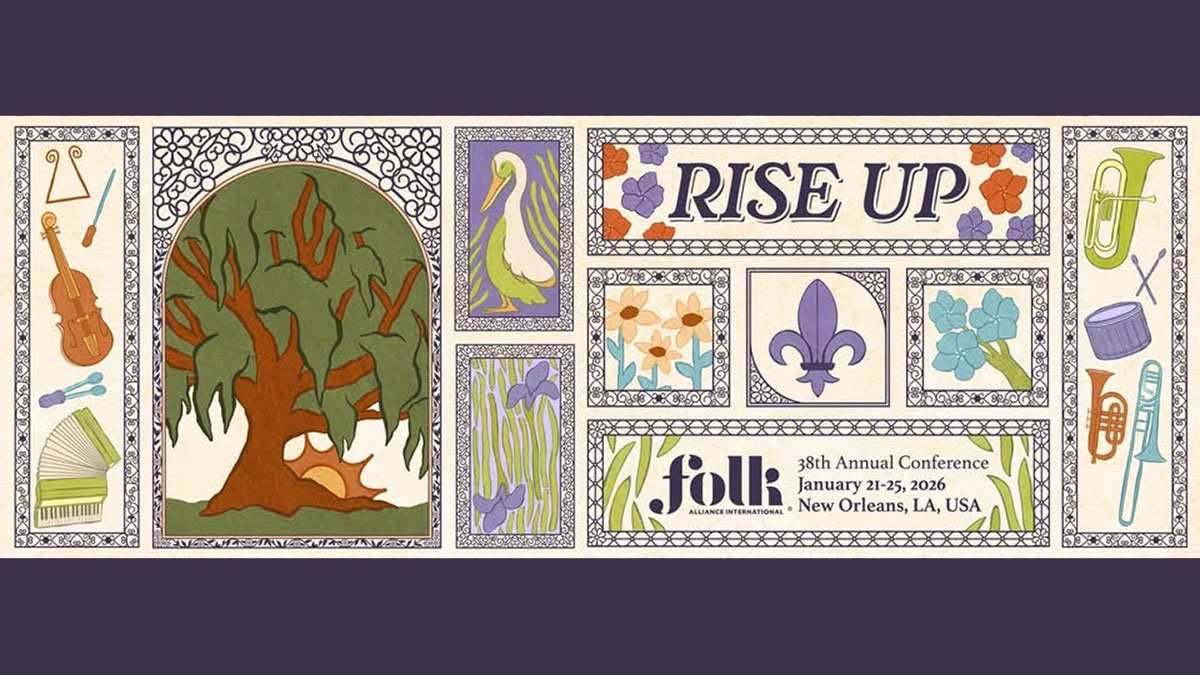
When Folk Alliance International 2026 arrived in New Orleans, it entered a city where folk music is not an abstract concept but a lived Black tradition. From Congo Square to neighborhood second lines, New Orleans has always been a place where music carries memory, resistance, joy, and survival. Over four January days from the 21st to the 24th, that truth echoed through every panel, performance, and gathering space- and Black Power 96 FM was there to document it from a Black perspective.
From the opening moments of the conference, Black culture set the tone. Early panels, keynotes, and affinity spaces framed folk music as collective memory rather than genre. A powerful keynote conversation featuring New Orleans’ own Big Freedia and Tarriona “Tank” Ball centered New Orleans as both birthplace and battleground, where Black artists have always created culture while navigating systems that rarely protected them. Their reflections underscored what many in attendance already understood: folk music has always been political, communal, and Black at its core.

Forging new connections and celebrating the power of community at Folk Alliance International. Attendees move through the conference space as conversations and connections unfold throughout the week.
As the week progressed, the conference floor became a living crossroads. Artists, organizers, music voices, and cultural workers moved between listening lounges, exhibit halls, and meeting rooms, building connections that felt less like networking and more like reunion. Black artists were not confined to specific moments or stages, they were present everywhere, shaping the energy and direction of the gathering.
A central anchor of the week was the presence of the Black American Music Summit (BAMS). BAMS programming provided intentional space for Black artists and industry leaders to gather, reflect, and strategize. Conversations focused on ownership, sustainability, access to airplay, and the long-standing structural barriers Black artists continue to face within folk and roots spaces. These sessions made clear that Black American music is not peripheral to folk as much as it is foundational.

Harmony in action. A beautiful highlight from the FAI stages, where voices blend and new stories are told. Black American Music Summit (BAMS) spaces centered connection, ownership, and the future of Black folk traditions.
By midweek, Folk Alliance felt fully alive. Daytime discussions flowed naturally into evening showcases, and music filled every corner of the venue. Official and private performances blended together, carrying blues, gospel, soul, Afro-Louisiana rhythms, and diasporic sounds through hallways and ballrooms. A session exploring Afro-Louisiana music traditions, led by Bruce “Sunpie” Barnes, reminded attendees that Louisiana’s folk traditions are inseparable from ack labor, history, and communal life.

Big Freedia and Tank take the stage at Folk Alliance International to discuss the business of being an original.

Live performances and discussions throughout the week reflected the depth and diversity of Black folk traditions. Bruce “Sunpie” Barnes joins the conversation through song in a vast, inclusive, and vibrant landscape.

Five-time Grammy winner Taj Mahal reminds us that folk is a living tradition. Black American Music Summit (BAMS) gatherings centered ownership, legacy, and Black cultural futures.
As the conference moved toward its final days, reflection and legacy came into sharper focus. Panels honoring elders and long-standing artists emphasized the importance of longevity, mentorship, and care. These are all values deeply rooted in Black cultural practice. Conversations about wellness and sustainability resonated with Black creatives who have long carried culture forward without institutional support.
Saturday’s closing moments brought both celebration and affirmation. The final gatherings, including a closing celebration at Tipitina’s, a venue steeped in Black New Orleans music history, felt less like an ending and more like a continuation. This is the very proof that these relationships and conversations would extend well beyond the conference walls.


A packed house at Tipitina’s for the final night of #FAI2026. The conference closed with celebration at Tipitina’s, a historic Black New Orleans music venue.
Running alongside the conference, the 2026 International Folk Music Awards honored artists and organizations whose work reflects the heart of folk music’s mission. Black excellence was front and center. Kyshona received the People’s Voice Award for her commitment to social and political commentary. Yasmin Williams was honored with the Rising Tide Award, recognizing emerging artists who inspire through both artistry and integrity. Lifetime Achievement Awards celebrated living legend Taj Mahal, legacy honoree Clifton Chenier, and Louisiana Folk Roots for their enduring cultural impact.
For Black Power 96, being a part of Folk Alliance International 2026 was about more than coverage. It was about documentation. Through photography and presence, BP96 captured moments that often go unrecorded. Hands on instruments, focused listening, shared laughter, and quiet affirmation. Together, these moments tell a larger story: folk music lives because Black people have always carried it.

The curtain falls on FAI 2026. We leave with full hearts and a renewed commitment to the music that brings us all together. See you in 2027!
As the conference drew to a close, Folk Alliance International paused not in silence, but in collective song. In response to ongoing violence in Minneapolis and across the United States, artists and attendees were invited to gather in the lobby of the Sheraton New Orleans Hotel for a community singing of “Lift Ev’ry Voice and Sing,” often called the Black National Anthem. With voices and instruments raised together, the moment became an act of unity, reflection, and resistance, drawing on the folk community’s long tradition of standing up for what is right. Written as a poem by James Weldon Johnson in 1900 and later set to music by his brother John Rosamond Johnson, the song has endured as a prayer for Black freedom and collective perseverance, echoing through the Civil Rights Movement and into the present day.
As participants sang, many reflected on the intergenerational power of the lyrics, how much has changed, how much has not, and why community remains essential. In that shared space, music once again served its deepest purpose: helping us process, remember, and recommit to one another doing this work, as the saying goes, ’til we free us.
From the Folk Alliance International 2026 outward, Black Power 96 remains committed to amplifying Black voices, preserving Black cultural memory, and telling our stories on our own terms, wherever culture gathers and sound becomes history.