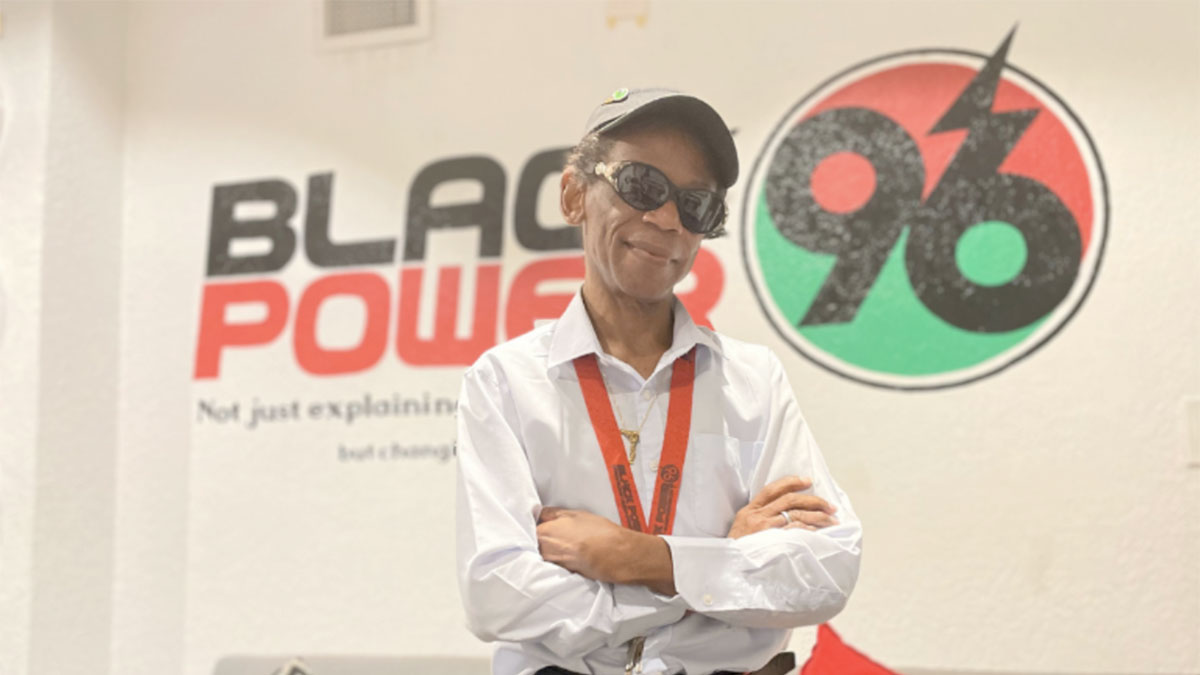
Dr. Mariah C. Bond, Black Power 96 Radio Volunteer
In St. Petersburg, Florida, our small black community radio station is carrying a fight that could set a precedent for the entire country. Black Power 96.3 FM Radio, a project of the African People’s Education and Defense Fund (APEDF), has taken Pinellas County to federal court in a landmark lawsuit after being denied fair access to COVID relief grants.
At the heart of the case lies a simple but powerful question: can the government silence independent African media by denying them public resources, while handing out millions to white-owned institutions?
The county says yes. Black Power 96 Radio is saying no. And now the 11th Circuit Court of Appeals has agreed to hear the case.
A lifeline for the African community
Since its launch in 2017, Black Power 96 Radio has been more than a station.
It has been a lifeline. Broadcasting African music, news and culture, BP96 provides a voice to a community long ignored or misrepresented by mainstream media.
When hurricanes hit the Gulf Coast, Black Power 96 Radio was there, broadcasting emergency updates when other outlets went silent.
When local families needed a platform to speak out against police violence or economic displacement, Black Power 96 Radio gave them the microphone.
It is a station built entirely by the African working class, with listener support, volunteer labor and grassroots fundraising drives keeping it alive.
Yet when COVID-19 devastated communities and the U.S. Congress authorized billions in relief for nonprofits and small businesses, Pinellas County found a way to keep Black Power 96 Radio out.
The lawsuit
In 2022, APEDF applied for COVID-19 relief funding on behalf of Black Power 96 Radio.
The station met all the qualifications. The grant funds were deemed to be used to upgrade the station’s emergency alert system and to install accessibility equipment for Station Manager and on-air talent, DJ Eddie Maultsby, “The World’s Best Blind DJ.”
The County first granted and then revoked the funds, openly declaring the basis of their denial to be opposition to the station’s viewpoints and associations.
“The County wanted to decide what kind of speech is acceptable,” said attorney Luke Lirot, who is representing Black Power 96 Radio. “That is unconstitutional. The First Amendment does not allow the government to pick and choose which viewpoints get funded.”
The lawsuit argues that the denial violated both the First Amendment, which guarantees freedom of speech and association, and the Fourteenth Amendment, which promises equal protection under the law.
By excluding Black Power 96 Radio while funding white-owned organizations, Pinellas County engaged in racial discrimination and political censorship.
“This is not just about one grant,” explained co-counsel Rachel Ricks, a First Amendment attorney who has worked extensively on the case.
“It’s about whether Black community institutions can ever access public resources without being punished for speaking the truth.”
Where the case stands now
Earlier this year, Judge Barber dismissed the case. This is a common tactic when governments want to avoid accountability.
But Black Power 96 Radio refused to back down. With the support of its legal team and community allies, the station filed an appeal.
In a major victory, the 11th Circuit Court of Appeals agreed to hear oral arguments, opening the door for the lawsuit to move forward.
“This means the judges see that there are serious constitutional issues at stake,” Lirot said. “And if we win, this could set precedent that prevents local governments across the country from using funding decisions as a weapon against community media.”
The oral arguments are expected later this year, in Jacksonville, Florida.
Why it actually matters
The implications go far beyond St. Petersburg.
Across the U.S., independent media outlets, especially those serving colonized communities, face political attacks and financial strangulation.
In recent years, universities have threatened to cut funding for student newspapers critical of the administration.
Public broadcasters have been targeted by state governments for airing programming on racial justice, LGBTQ rights, or Palestinian liberation.
Even major outlets have faced advertiser boycotts and political pressure campaigns.
If Pinellas County succeeds in its attempt to starve out Black Power 96 Radio, it could embolden governments elsewhere to silence dissent by weaponizing funding.
But if Black Power 96 Radio wins, it will send the opposite message: that the First Amendment protects not only corporate media but also grassroots Black voices challenging colonial power.
But Black Power 96 Radio is not fighting alone. The case has drawn support from broadcasters and attorneys across the country.
Mimi Rosenberg, longtime Pacifica radio host and founding member of the new Ida B. Wells Media Defense Network, has called the lawsuit a front line battle for all independent media.
“This is not just St. Petersburg’s fight. It is every broadcaster’s fight who refuses to be a mouthpiece for the state.”
Recently, Jesse Nevel, one of the “Uhuru 3” who faced federal charges in a high-profile free speech case, saluted Black Power 96 Radio for refusing to bow down. “Victories in the courts are possible, but only when backed by organized political struggle and the refusal to be silenced.”
A voice that will not be silenced
Black Power 96 Radio has weathered storms before. It has built a station brick by brick, mic by mic, with nothing but the determination of the African working class.
And it has never once wavered in telling the truth about poverty, police violence and the struggle for liberation.
“This lawsuit is proof that our work matters,” said Station Manager Eddie Maultsby. “If we weren’t a threat, they wouldn’t try to shut us down. But we will not be silenced. With the people’s support, we will win.”
The court battle ahead is historic. A victory would not only restore fairness for Black Power 96 Radio, but also strike a blow against censorship and racial discrimination nationwide. The stakes could not be higher. Black Power 96 Radio is asking all freedom-loving people to stand up, donate and spread the word.
Though the attorneys are generously working pro bono, the costs of waging this fight are real: court fees, printing, shipping, travel and administrative expenses.
That’s why Black Power 96 Radio has launched our Legal Defense Fund, with an urgent goal of raising funds to cover immediate costs of the appeal.
Because when one community station is silenced, all of us lose our voice. But when we defend Black Power 96 Radio, we defend the right of oppressed people everywhere to speak, to organize and to win.
Donate today: BlackPower96.org/LegalFund
Support the fight!
Keep Black Power 96 on the air!